
Common Slow Worm
Anguis fragilis
Life History
Length: 40-50cm
Weight: 20-100g
Diet: Invertebrates
Average Lifespan: up to 20 years
Habitat: Grassland, woodland, heathland
When to see them: April to October
UK conservation status: Protected
About
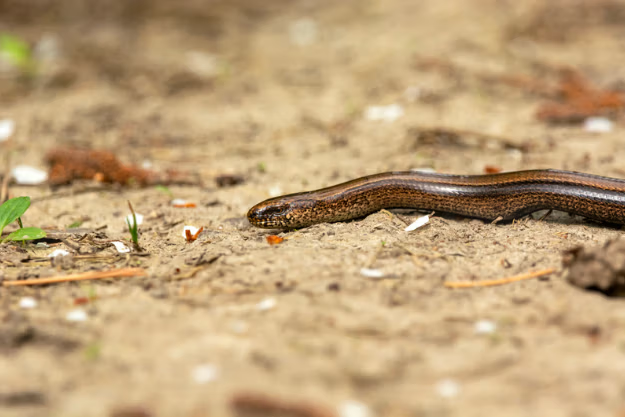
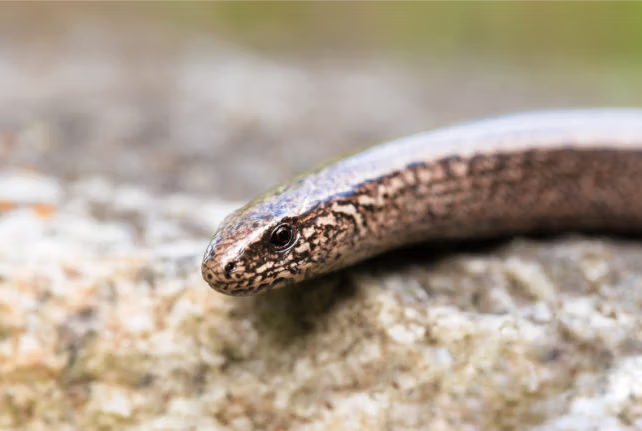
Looking much like a snake, the slow worm gets mistaken for one quite often. So, what makes them different? The slow worm is actually classed as a legless lizard. Unlike snakes, they have eyelids, giving them the ability to blink.
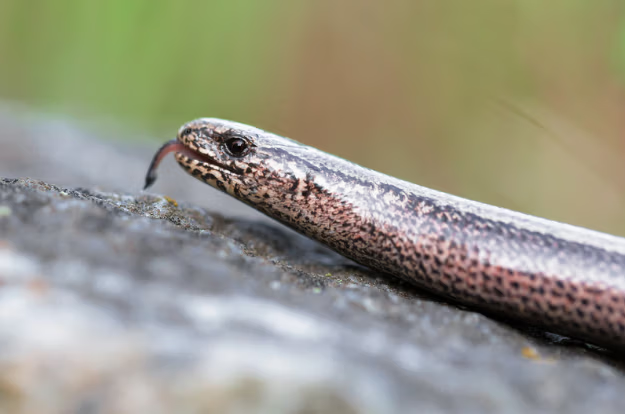
Slow worms also have different tongues to their familiar reptilian neighbours. While snakes have a long, slender forked tongue, the slow worm has a thicker, notched tongue.
They are placid, timid creatures and have a non-aggressive nature towards humans.
Slow worms are natural pest controllers, as their diet consists of slugs, snails and other invertebrates, making them the perfect garden companion.
Slow worms have an amazing defence mechanism. To escape predators, they are able to drop their tails. Once the tail is dropped, it thrashes around for several minutes to distract the predator whilst the worm escapes.
Their Decline
The common slow worm is experiencing an increasing decline across the UK due to habitat loss, fragmentation and development.
The slow worm plays an important role in our ecosystem. As natural pest controllers and mid-level predators, they are highly beneficial to biodiversity and indicate a healthy, unpolluted environment. Not only this, but they play their role in the food chain as they are a vital food source for other wildlife such as badgers, foxes, hedgehogs and various bird species.
Their conservation is vital for maintaining biodiversity.
How can I help slow worms?
There are a number of simple ways you can help slow worm numbers improve:
- Create and encourage natural wild areas for slow worms to hunt and breed.
- Remove or store-away netting to prevent entanglements.
- Put bells on cats to help prevent cat attacks.
- Keep a note for a local wildlife rescue in case you find an injured or trapped slow worm.
If you find an injured or entangled slow worm:
- Call a professional wildlife rescue before handling.
- If advised to handle, place the slow worm into a secure box with air holes.
- Transport the slow worm to your closest wildlife rescue to ensure the worm receives the appropriate treatment and care.