
Brown Rat
Rattus norvegicus
Life History
Length: 15-27cm
Tail: 10.5-24cm
Weight: 200-300g
Diet: As true omnivores they will consume almost anything
Habitat: Grassland, farmland, fresh water, coastal, wetlands, woodlands, towns and gardens
Average Lifespan: 5-10 years
When to see them: All year round
UK population: Estimated around 10 million, although, this number could be higher
UK conservation status: Least concern
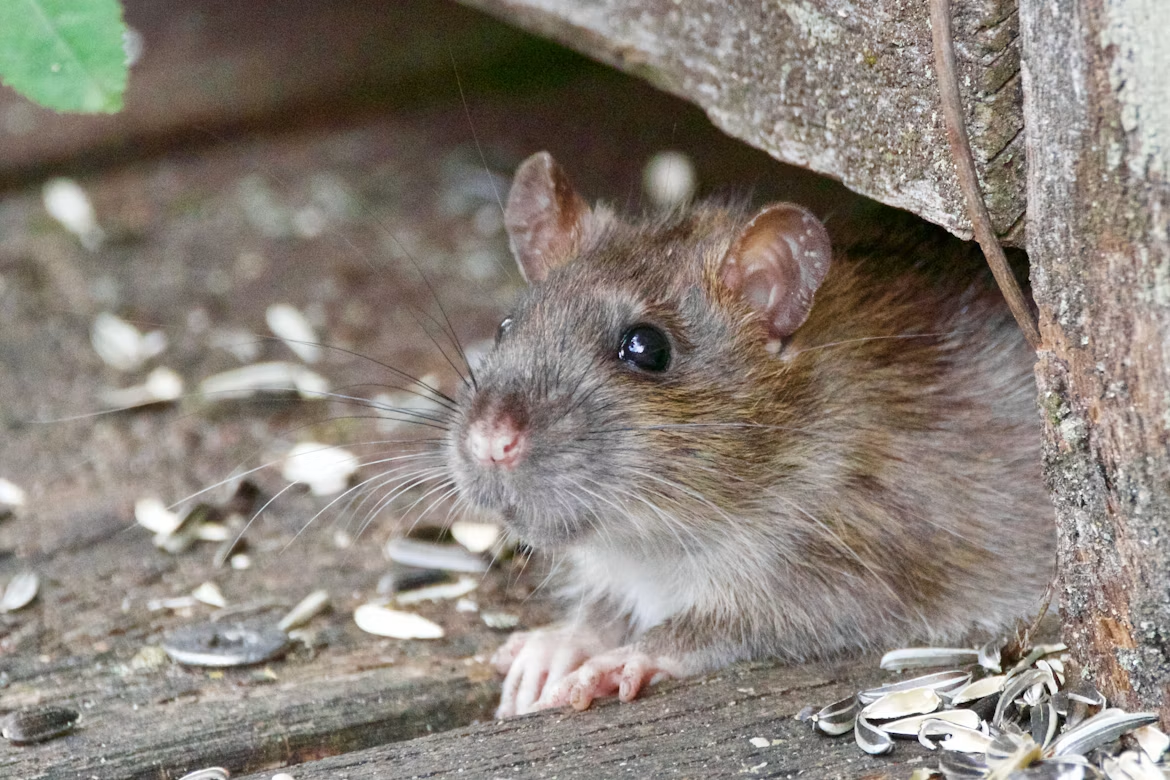
About Brown Rats
Although very prominent in the UK, the brown rat is a non-native species, brought to the British Isles around 1720 from Asia. Often carried by humans in ships, the brown rat can be found in most areas of the world.
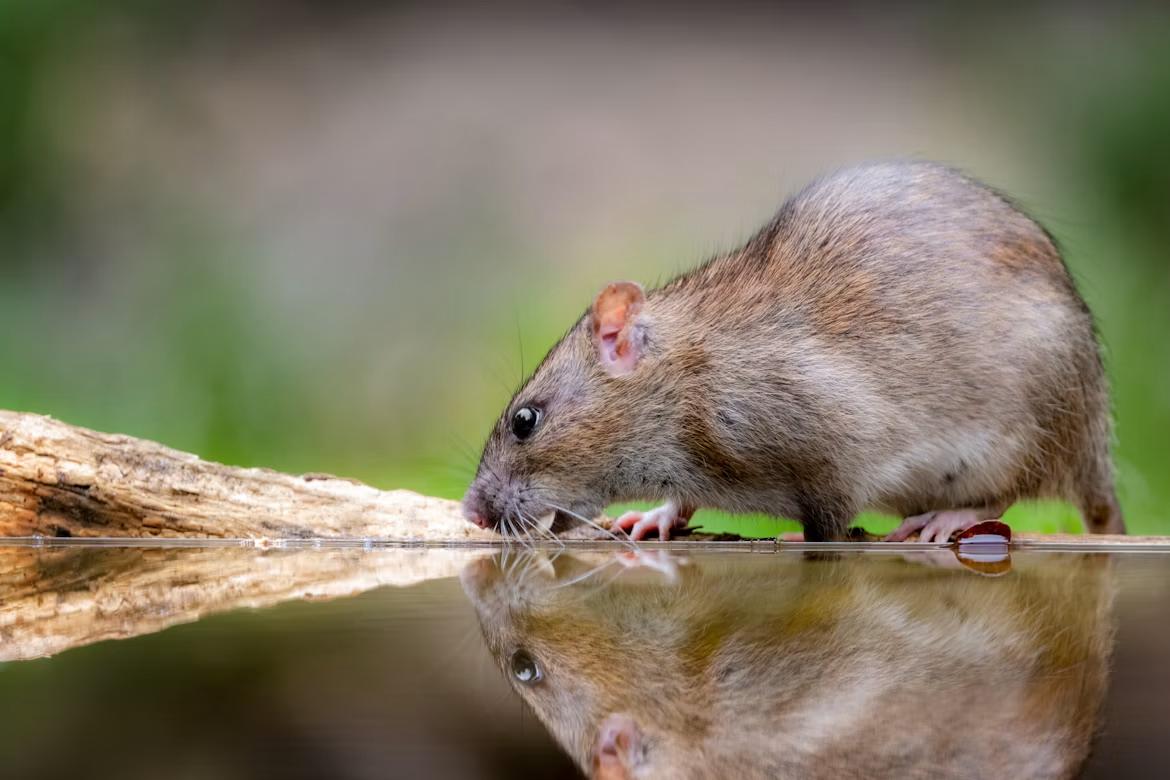
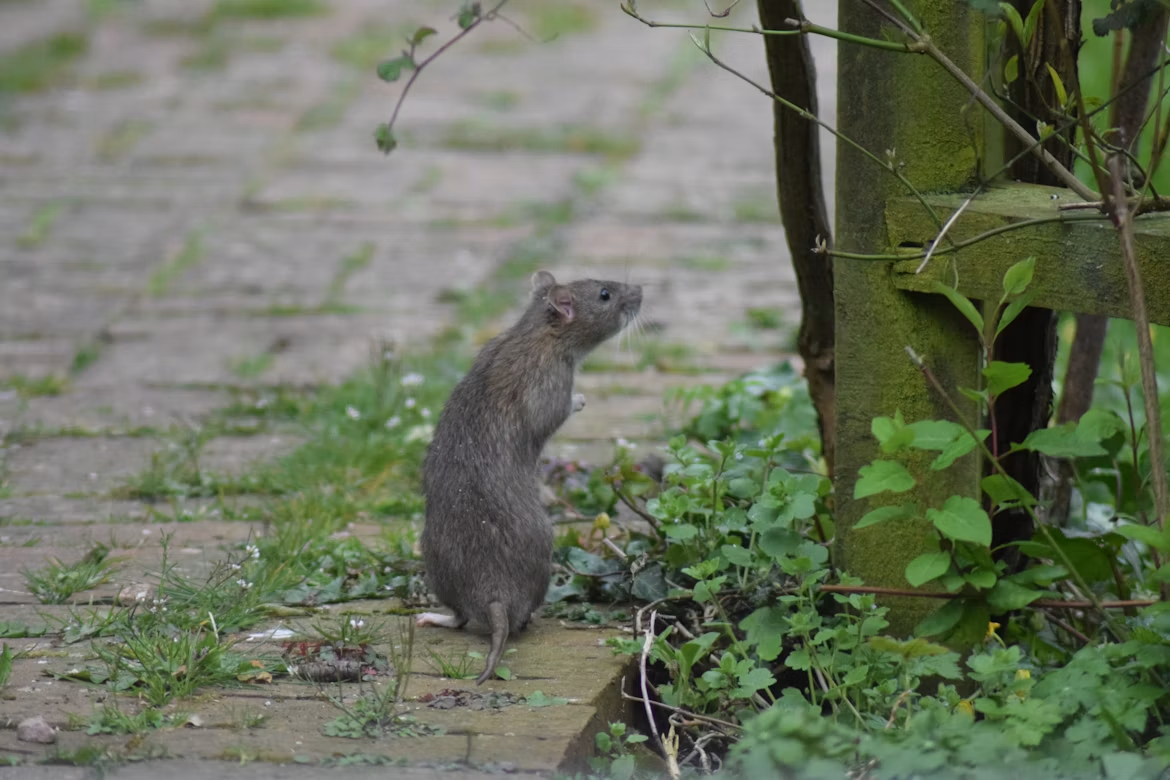
Brown rats are non-territorial but live in hierarchies. These are determined by age and size. Brown rats have burrows in which they live, with entrances joined by runs. They dig holes similar to water voles, roughly 6-9cm in diameter and can usually be found near water. You can also find rat burrows in hedgerows, rubbish tips and near tree roots and logs.
Although non-native and seen as pests, brown rats are intelligent, social and highly adaptable mammals that actually play an important role in our ecosystem by acting as a food source for predators and scavenging organic waste.
While rats can sometimes cause problems for people, particularly when they live around homes or businesses, this doesn’t make them pests by nature. Like any wild animal, they are simply trying to survive.
Brown Rats - Their Threats
Pest control methods: Rodenticides and inhumane traps are one of the biggest threats the brown rat faces. Hundreds of thousands of brown rats are killed, each year, by these painful methods that usually cause prolonged suffering.
Road traffic accidents: Like much of our wildlife, road traffic accidents are one of the biggest threats brown rats face as many are killed each year.
Predation: Brown rats face predation from many animals including red foxes, stoats, large owls and cats.
How You Can Help
There are a number of ways you can help brown rats:
- Stop using inhumane pest control methods. If pest control methods must be used, humane traps are available, however, these MUST BE CHECKED FREQUENTLY. Catching a rat in a humane trap and leaving it there for a prolonged period is just as bad as an inhumane trap. Alternatively, avoid infestations altogether by storing food properly, blocking access to buildings, securing bins and being careful when feeding birds (spillages will attract rats).
- Avoid destroying their home. Where rats are living away from people, avoid disturbing their nests unnecessarily. Dense vegetation, hedgerows and areas of natural cover provide shelter for many wild animals.
- Contact your local wildlife rescue if you believe you see an injured rat
- Remember: brown rats are wildlife too, and they are just trying to survive
Frequently Asked Questions
There is an injured animal in my garden, but it runs off when I approach it
Unfortunately, most wild animals will try to avoid capture no matter the injury it may be suffering with. The best way to help is to try and identify the injury; are they holding or dragging a leg? Can you see any obvious swelling or open wounds to any of the legs or body? If there are open wounds do they look deep, inflamed or infected?
Mobile animals are incredibly difficult to catch.
I think I've found an orphaned animal
If the animal doesn’t appear to be injured, is routinely calling and warm to the touch, monitor the animal for a short while from a distance, the parent may have dropped the animal whilst moving it, and may still be close by.
Due to the number of factors that need to be considered when finding an animal, the best port of call is to give us a call so we can triage the situation appropriately. Our emergency helpline is 01372 360404.
There is an animal entangled in wire, what should I do?
Do not attempt to free the animal yourself. Also, do not go too close to the animal, as it can cause it to become very stressed and possibly do itself more damage. Please, call us and we will send a rescuer.
I have found a dead animal by the roadside, what should I do?
Please, contact your local council, who will advise you on how to dispose of it; some councils may come and collect. Otherwise, you can put it into an overgrown area, and let nature take its course, which is the best option.
If the animal is a badger and found during the period January – April, please, check to see if there are teats, to see if it is a female, and to see if there are any signs that she may have young – heavy, drooping nipples or milk escaping (lactating). If you see any of these signs, there may well be young, nearby. Please, contact the Wildlife Aid Foundation, your local wildlife centre or your local badger group. In Surrey, this will be the West/East Surrey Badger Group, who will go out to search for signs of a sett and listen out for the call of young.