
Eurasian Sparrowhawk
Accipiter nisus
Life History
Wingspan: 55-70cm
Weight: 110g-342g (females are generally larger than males)
Diet: Carnivorious – small mammals such as birds
Average lifespan: 3-4 years
When to see them: All year round (the best time to see them is winter)
UK population: est. 35,000 breeding pairs
UK conservation status: Amber
About
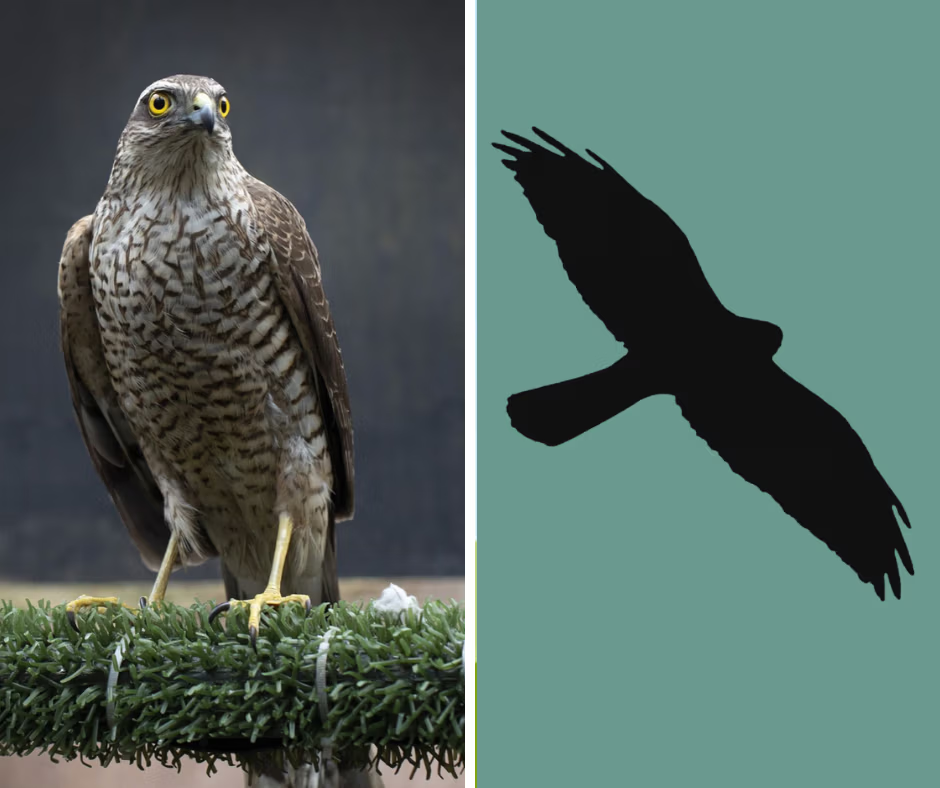
Recognized for its “T” shaped flight, rounded wings and long, square ended tail, the eurasian sparrowhawk is a remarkable smaller bird of prey.
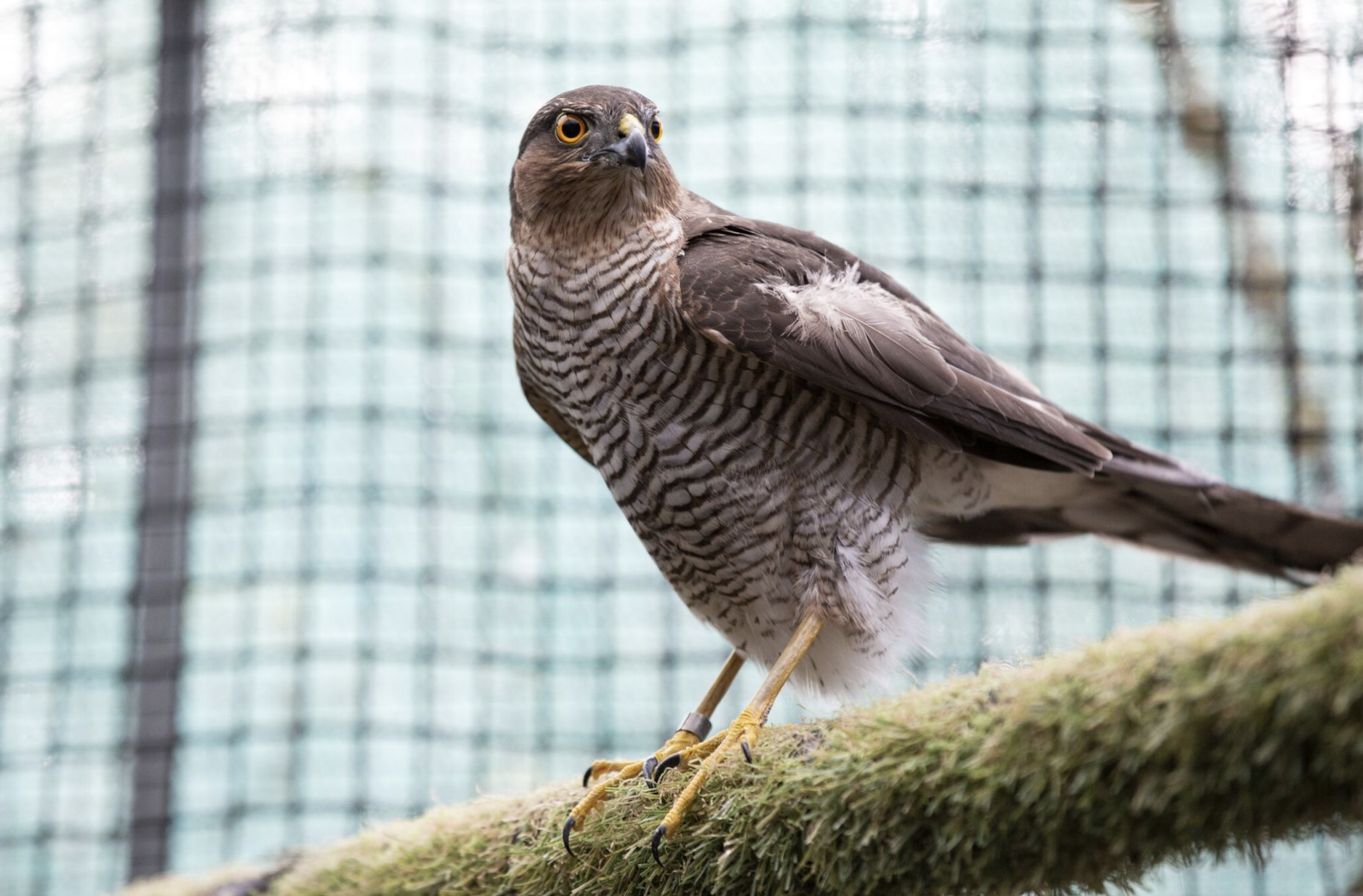
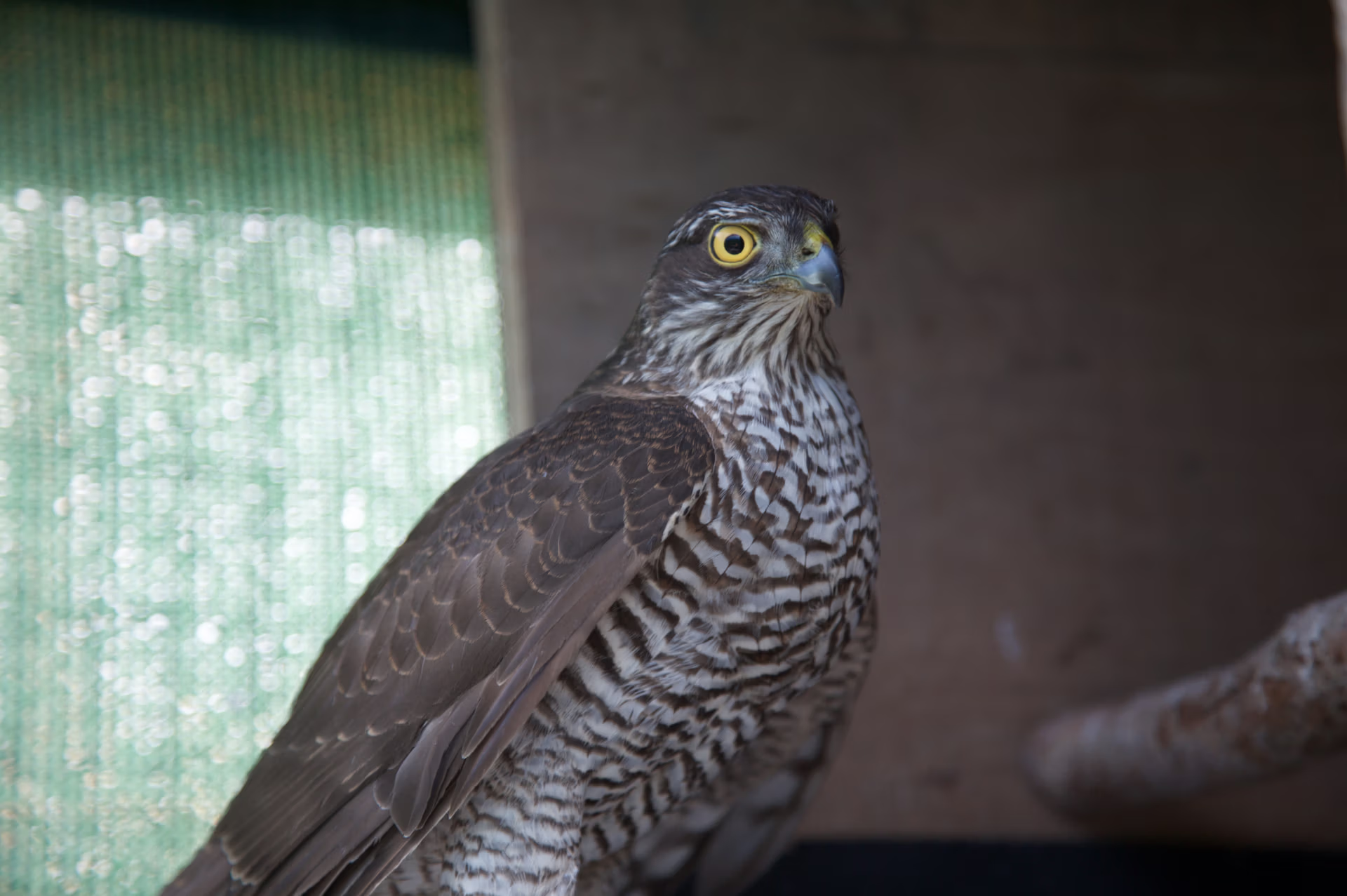
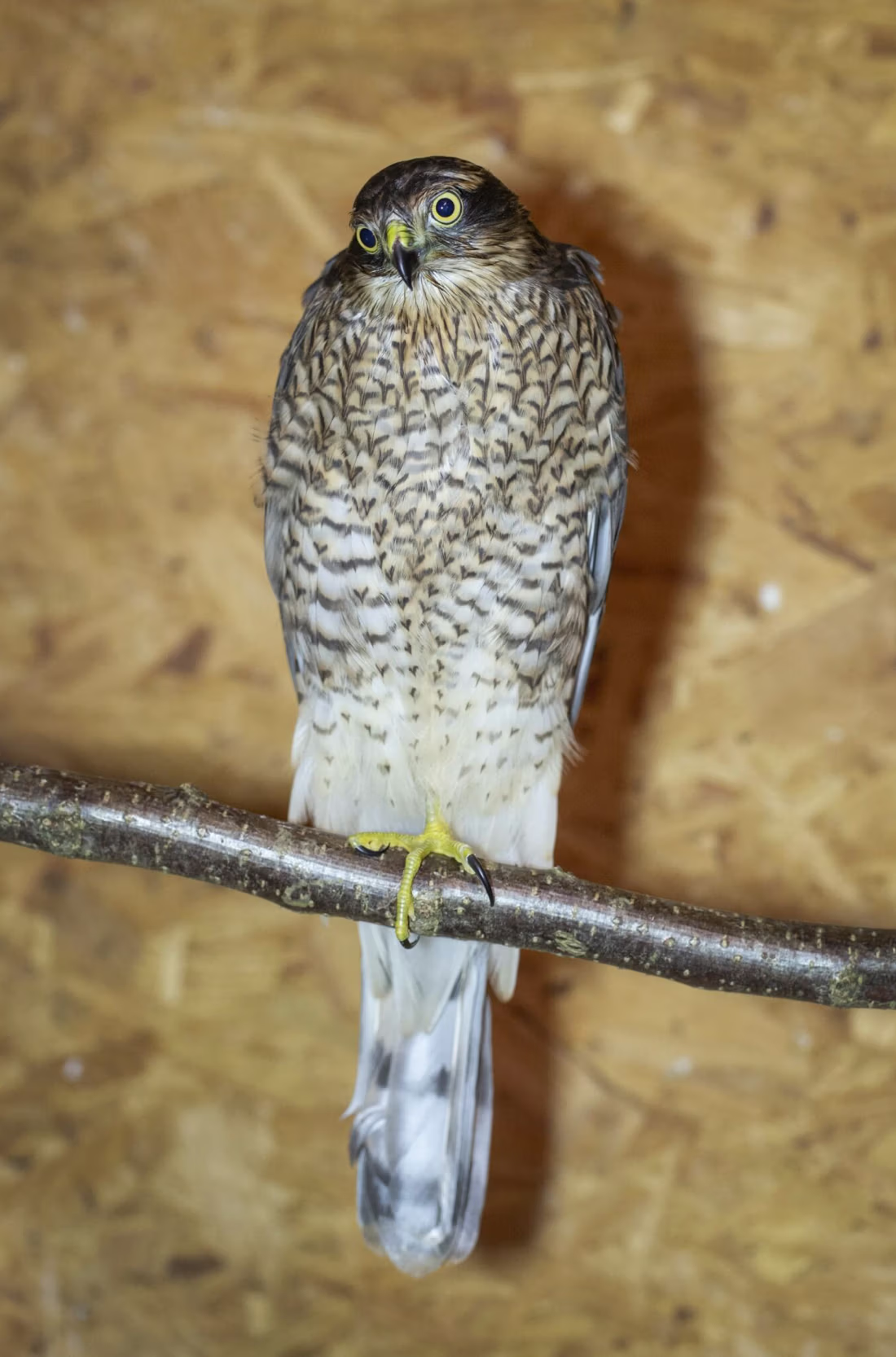
Males and females look slightly different, with males having a blueish-grey back and wings and orangey bars across their chest. Females and young sparrowhawks however, are more of a brown colour, with brown bars across their chest.
Sparrowhawks habitats consist of multiple locations such as farmland, wetland, heathland, grassland, urban and suburban areas.
Behaviour
Sparrowhawks are extremely quick and are known for their fast, agile hunting style. They use cover such as buldings and trees to hide before quickly snatching up their prey. They have been known to attack bird feeders at speeds of up to 30mph and can often be found in the morning.
The sparrowhawk is the bird of prey you will most likely find in your garden as they have adapted to hunting in confined spaces.
Often, sparrowhawks will nest in dense woodlands and breed between May and July.
Their Threats
Poisoning: Intentional or accidental poisoning (e.g., rodenticides) can have fatal consequences.
Habitat Loss: Changes in land use, deforestation, and intensive farming reduce nesting and hunting areas.
Persecution: Though protected, illegal shooting or trapping still occurs in some areas.
Collisions: Sparrowhawks may collide with vehicles and windows.
How You Can Help
Create Sparrowhawk-Friendly Habitats: Allow woodlands and hedgerows to thrive, providing nesting and hunting grounds.
Report Wildlife Crime: If you suspect illegal persecution, report it to the RSPB or local authorities.
Avoid Rodenticides: Use non-lethal pest control methods to prevent secondary poisoning.
Support Conservation Groups: Donate to or volunteer with organisations that work to protect birds of prey.
Frequently Asked Questions
I found an injured sparrowhawk. What should I do?
I found a sparrowhawk chick on the ground. Should I intervene?
Not necessarily. Observe from a distance to see if the parents are nearby. If the chick appears uninjured and in a safe location, it’s best to leave it, as the parents are likely still caring for it. If in immediate danger or clearly abandoned, contact a wildlife professional for guidance.
Are sparrowhawks dangerous to pets?
Sparrowhawks rarely pose a threat to pets. They typically hunt small birds and are unlikely to attack anything larger.